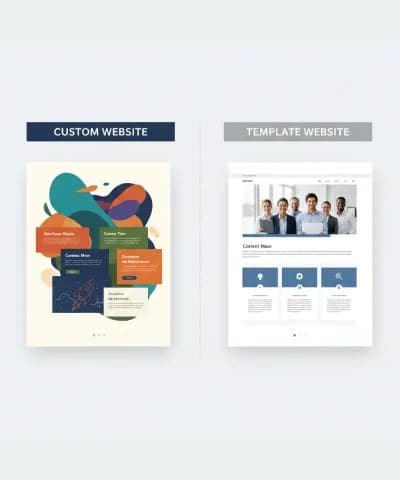
You’ve got your business plan ready, your brand identity locked in and now you need a website. Then comes the big question that stumps nearly every business owner: should you go with a template or invest in custom development? It’s a decision that affects not just your budget, but your brand perception, growth potential and competitive edge in UAE’s crowded digital marketplace.
Let’s cut through the marketing noise and look at what web development agencies actually recommend based on real business needs.
Understanding the Fundamental Difference
Before we dive into comparisons, let’s clarify what we’re actually talking about.
What Are Template Websites?
Template websites use pre-designed themes or layouts that you customize with your content, colors and branding. Think of them like buying a furnished apartment the structure, layout and basic features already exist. You move in your belongings and make it yours within the existing framework.
Popular platforms like WordPress, Wix and Shopify offer thousands of templates. You select one that fits your industry, add your logo and content and you’re online. Many website development agencies in UAE offer template-based solutions using premium themes with professional customization.
What Are Custom Websites?
Custom websites are built from scratch specifically for your business. A software development company UAE designs every element layout, features, functionality around your unique requirements. It’s like hiring an architect to design a house exactly how you want it, from foundation to finish.
Custom development involves detailed planning, wireframing, design mockups, coding, testing and refinement. The result? A website that’s uniquely yours, functioning exactly as you need it to.
Custom vs Template Websites: The Honest Comparison
Let’s break down the key factors that matter to your business.
Cost Considerations
Templates: Starting costs range from AED 5,000 to AED 25,000 for a professional setup with a website development agency in UAE. DIY templates can be even cheaper (AED 500-2,000 annually), though they require your time and technical know-how.
Custom: Expect AED 25,000 to AED 150,000+, depending on complexity. Yes, it’s significantly more expensive upfront, but you’re paying for unique functionality and design that templates simply can’t deliver.
The cost gap narrows when you factor in long-term modifications. Templates often require expensive workarounds or plugins for unique features, while custom sites accommodate changes more efficiently.
Development Timeline
Templates: You can launch in 2-6 weeks. If speed to market matters say you’re launching a time-sensitive campaign or need an online presence quickly templates deliver fast results.
Custom: Plan for 8-16 weeks minimum, potentially longer for complex projects. Custom web development in UAE involves research, strategy, design iterations, development and thorough testing. Rush it and you’ll regret it.
Design Flexibility and Uniqueness
Templates: You’re working within constraints. While modern templates offer customization options, you’ll likely see other websites with similar layouts. According to recent web design studies, approximately 27% of websites use the top 100 WordPress themes, meaning design similarities are common.
Custom: Complete creative freedom. Your brand deserves a unique digital presence and custom development delivers exactly that. Every pixel, every interaction and every feature reflects your brand identity.
Scalability and Future Growth
Templates: Growth capabilities depend on your chosen platform and theme. Adding features might require plugins that slow your site or create compatibility issues. Some templates handle scaling well, others become problematic as your needs evolve.
Custom: Built with your growth roadmap in mind. Need to integrate with specialized software? Add complex booking systems? Create custom user portals? Custom websites accommodate these additions seamlessly because the foundation supports expansion.
Maintenance and Updates
Templates: Regular updates from theme developers keep security patches current, but sometimes updates break customizations. You’re dependent on the theme developer’s support timeline and priorities.
Custom: You own the code. An IT services company UAE can modify anything without waiting for third-party updates. However, you’re responsible for security maintenance and updates, which requires ongoing technical support.
When Template Websites Make Perfect Sense
Templates aren’t inferior, they’re practical solutions for specific situations:
- Startups Testing Ideas: If you’re validating a business concept before a major investment, templates let you establish an online presence quickly and affordably.
- Small Businesses with Standard Needs: If your requirements are straightforward showcase services, collect contact forms, display a portfolio quality templates handle this beautifully.
- Budget-Conscious Projects: When resources are limited and your needs are simple, templates maximize value. Spending AED 100,000 on a custom site for a local boutique might not make business sense.
- Quick Launch Requirements: Need a website live for an event next month? Templates deliver speed.
When Custom Development Is Worth the Investment
Custom development makes sense when:
- Your Business Process Is Unique: If your operations don’t fit standard molds complex booking systems, custom calculators, specialized client portals templates will frustrate you endlessly.
- Brand Differentiation Matters: In competitive UAE markets like real estate, luxury retail, or financial services, your website is often the first impression. Standing out requires unique design.
- Integration Requirements Are Complex: Need to connect your website with proprietary ERP systems, custom CRM platforms, or specialized third-party services? Custom development handles these integrations cleanly.
- Scaling Is Part of Your Strategy: If you’re planning significant growth or eventual enterprise-level functionality, building custom from the start prevents expensive rebuilds later.
- Performance Is Critical: Custom-coded websites typically load faster than template sites, weighed down by unnecessary features and bloated code.
Making the Right Choice for Your UAE Business
Here’s the truth: there’s no universal “right answer.” The custom vs template websites decision depends entirely on your specific situation.
Ask yourself these questions:
- What’s my realistic budget for both initial development and ongoing maintenance?
- How quickly do I need to be online?
- How unique are my functional requirements?
- How important is brand differentiation in my industry?
- What are my growth plans for the next 2-3 years?
Many businesses actually benefit from a hybrid approach: start with a professional template to establish presence, then transition to custom development as the business grows and needs become clearer. This strategy minimizes risk while positioning you for future growth.
At 67 Digital Agency, we’ve guided hundreds of UAE businesses through this decision. Sometimes we recommend templates; sometimes custom development is clearly the right path. Our job isn’t to sell you the most expensive solution; it’s to match the right approach to your actual business needs, timeline and growth ambitions.
The best website isn’t the one with the most features or the highest price tag. It’s the one that serves your business goals effectively within your constraints. Contact us today!
Frequently Asked Questions (FAQ)
Q1: Are template websites good for business?
Ans: Yes, template websites work excellently for many businesses, especially startups, small companies with standard needs and those requiring quick launches. Modern templates are professionally designed, mobile-responsive and cost-effective. They become limiting only when you need highly unique functionality or want to stand out significantly in competitive markets.
Q2: How much does a custom website cost vs. template?
Ans: Template websites with professional setups typically cost AED 5,000-25,000, while custom websites range from AED 25,000 to AED 150,000+, depending on complexity. However, long-term costs narrow as templates often require expensive plugins or workarounds for unique features. Consider both the initial investment and the 3-year total cost of ownership when comparing.
Q3: Can I switch from template to custom website later?
Ans: Yes, many businesses start with templates and transition to custom development as they grow. Your content (text, images and products) transfers easily, though you’ll need to rebuild design and functionality. This staged approach minimizes initial risk while positioning you for future growth. Plan for a 2-3 months transition time for proper custom development.
Q4: Which is better for SEO: custom or template websites?
Ans: Both can rank well if properly optimized. Custom websites often perform better technically (faster loading, cleaner code), but modern premium templates are also SEO-friendly. Success depends more on content quality, technical optimization and ongoing SEO efforts than on whether you use a custom or a template. Poor custom development can actually perform worse than well-optimized templates.